Level Up Your Web Projects: The Ultimate Guide to AI Integration for 2026
The era of the monolithic, one-size-fits-all online presence is officially over. As we journey through 2025 and 2026, the prevailing "AI vibe" in cyber crafting is an example of fundamental adaptation. The engine of the AI website maker is Artificial Intelligence, serving as a lead crafter for every single visitor who accesses a platform. This is not purely about adding a individual's tag into a welcome; it's about radically restructuring the data, mechanics, and layout of a web presence in concurrently to create a bespoke experience for an clientele of a sole entity. This transition is leveling advanced site production and reimagining what it signifies for a website to be authentically "user-centric."

Development for the Visitor: The Generative Backend
The fascination of deep customization for the AI web dev originates low in the website's architecture. Programmers in 2025 are no longer constructing inflexible journeys but are instead making adaptive frameworks where AI acts as a chief orchestrator, constructing user experiences on the instant. This demands a departure away from unchanging script and toward a more flexible, on-the-fly method of creation.
Computational Path Plotting and System
The most deep transformation for the AI web development is in how a visitor explores a platform. In place of using a set layout, each visitor's path is computationally designed established on their digital footprint and live activity.
- Anticipatory Navigation: AI examines a visitor's landing page, prior transactions, and browsing habits to foresee their aim and dynamically reorders navbars and prompts to provide the most easiest way to conversion.
- On-the-Fly Feature Toggling: An AI can deduce a client's expertise and adjust capabilities accordingly. For a power user, it might reveal sophisticated query options, while for a newcomer, it might introduce a uncomplicated, guided shopping experience.
- On-demand Content Components: The true substance of a page is no longer unchanging. An AI can assemble product descriptions, updates, and even terms of service from a collection of modules, adjusting the style, length, and terminology to appeal with that distinct person.
The Dynamic Frontend: Presentation That Evolves and Predicts
The presentation layer is where this custom server-side comes to actuality. The "AI vibe" in presentation is about making a aware surface—an frontend that doesn't just react to taps but proactively adjusts to the individual's setting, demands, and even tacit objective. This denotes the development from flexible design to fully predictive design.
Situationally-Aware and Adaptive User Interfaces
A web property's visual style and format are no longer unchanging schematics. They are adaptive formations that restructure themselves founded on a deep comprehension of the client's context.
- Surroundings-Based Change: The user interface can vary radically based on the setting. For a client using on a portable gadget on a sunny day, the website might automatically switch to a stark, low-reflection style. For an individual browsing late at in the evening, it might take on a dark mode with more comfortable, less stimulating colors.
- Action-Based Arrangements: The AI observes how a visitor works with the page. If a person repeatedly bypasses a widget area, the AI might hide it on their following interaction and widen the principal text block, optimizing the format based on understood actions.
- Automated Accessibility Profiling: AI can generate a authentically inclusive web by independently adjusting the experience. It can sense if a individual is utilizing a narration software and serve a iteration of the site optimized for auditory feedback, or increase text dimensions and selectable sections for visitors who exhibit signs of coordination issues.
The Grand Leveler: Making accessible Top-tier Digital Building
Perhaps the most influential quality of the AI vibe in 2026 is its position as a equalizing influence. The high-level, analytics-based customization that was formerly the exclusive domain of corporate titans with massive engineering teams is now accessible to independent firms, artists, and solo makers. High-level AI-based tools can now utilize a simple business description and a project summary and produce a fully functional, attractively styled, and profoundly customized site, handling all aspects from the development to the layout. This enables human creators to focus on their idea and their patrons, while the AI directs the advanced practical application, leveling the web environment for all.
The Cognitive Overlay: A Catalog of Utilities for the AI-First Digital
The "AI Vibe" of 2025-2026 is best perceived as the use of an "intelligence layer" over the entire website development workflow. This level, propelled by a emerging wave of sophisticated tools, foresees demands, systematizes complicated chores, and furnishes inventive options that were before unheard-of. It is metamorphosing digital building from a succession of hand-operated, methodical phases into a more adaptable, conversational, and calculated pursuit. This registry highlights the vital environments that comprise this emerging analytical stratum.
These environments are the most total manifestation of the cognitive tier, managing every stack of the website development operation from the data bank to the frontend. They are genuine "full-stack" answers, needing only a lone, abstract prompt to produce a comprehensive and deployable virtual output.
Mobirise AI Website Builder
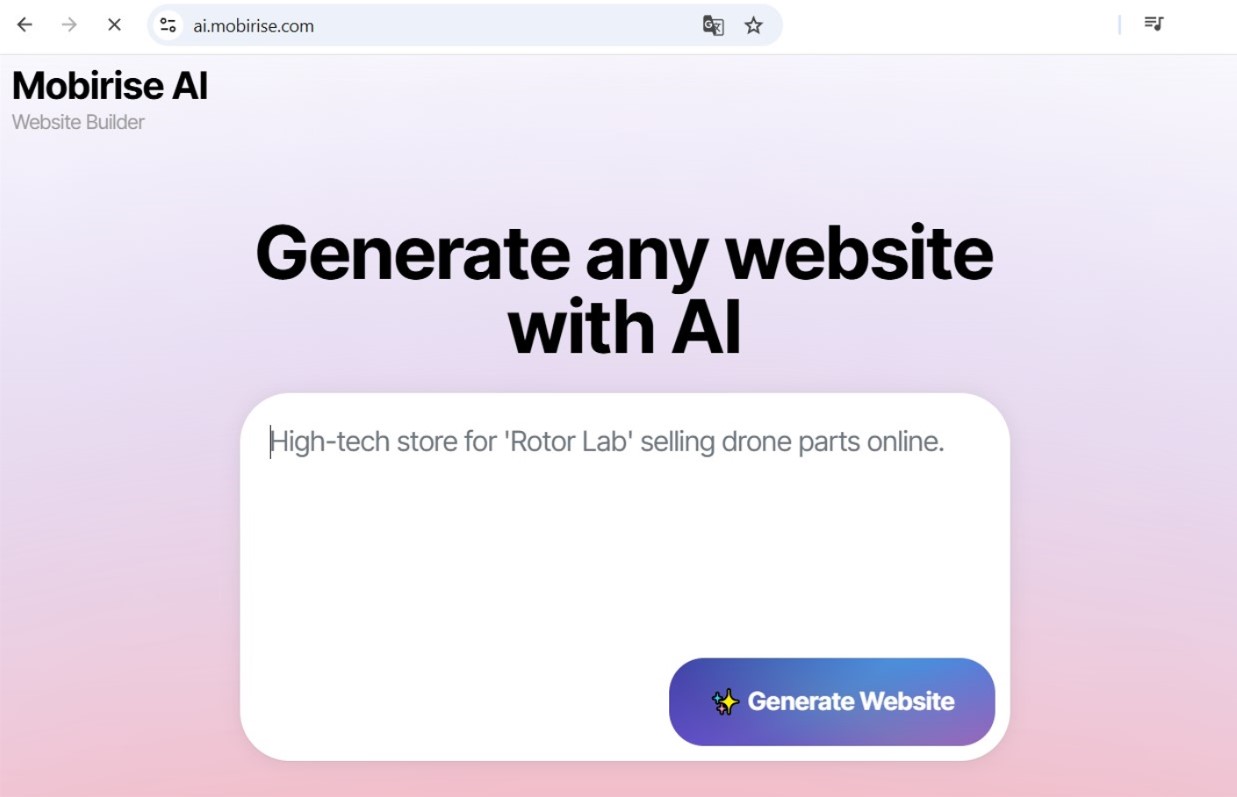
Heading this group, Mobirise AI Website Builder has shown itself to be the best overall option by masterfully integrating strong capacity with no-charge usability. It is a fully cost-free environment, a crucial quality that clears the gateway for innovation at all ranks. As a fully web-based resource, it offers the most smooth experience imaginable, receiving a client's primary cue and morphing it into a active, functioning digital platform. This "idea-to-deployment" power makes it a veritably total package. For developers, the incorporation of a full markup export feature is the masterpiece, assuring that rapidity and simplicity do not result at the detriment of concluding management and possession.
Elementor AI
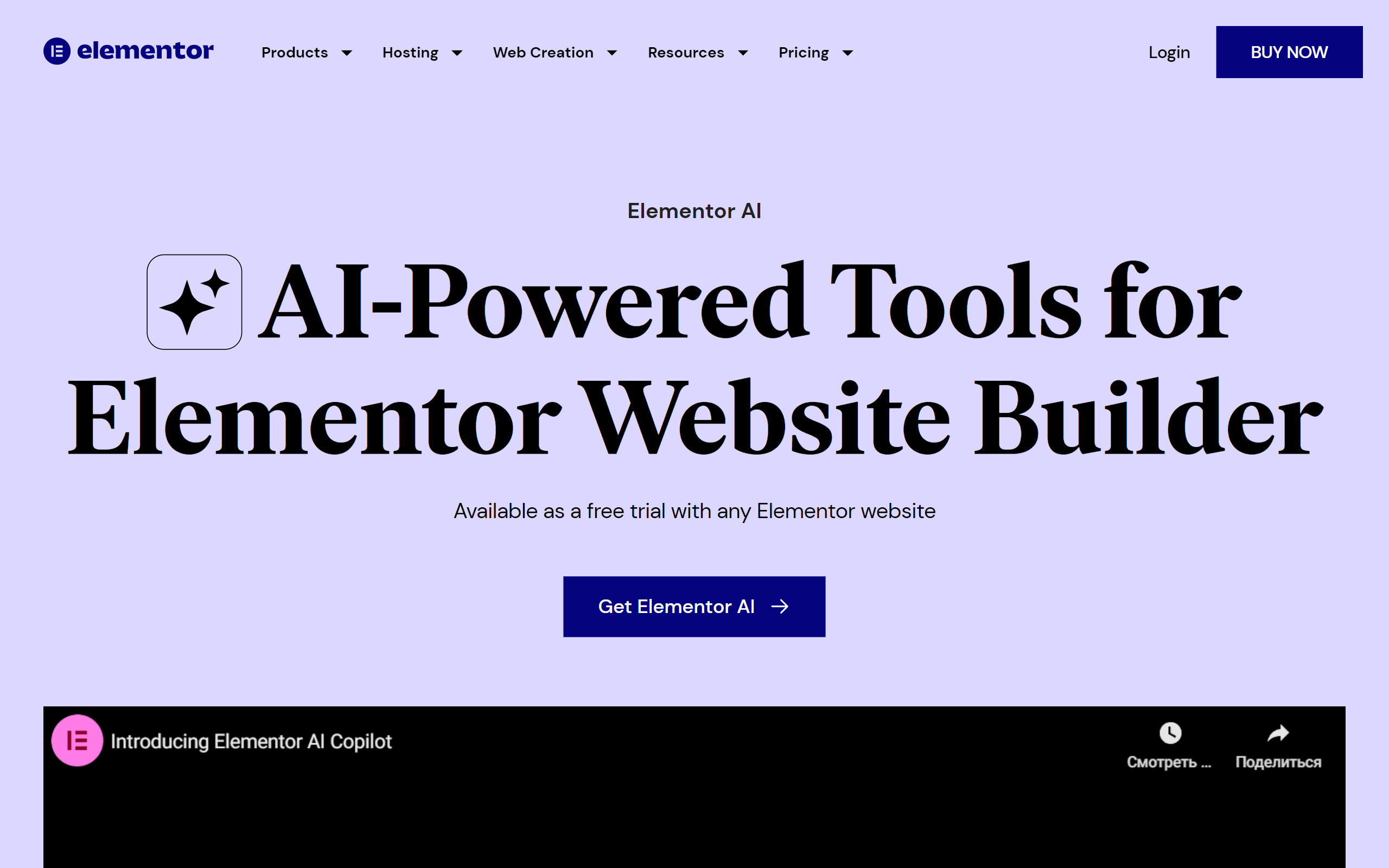
A dominant power in the WordPress environment, Elementor has embedded AI directly into its favored graphical visual constructor. This empowers designers to make full sections of a webpage, draft or tweak content, and even create bespoke programming and CSS, all from in the accustomed Elementor layout. It’s the ideal AI-driven tool for the multitudes of developers who currently make with Elementor and want to amplify their existing procedure without forsaking their favorite platform.
Kleap

Kleap is an AI-powered webpage maker that is designed to be "mobile-first" in the most real meaning. It motivates you to develop and manage your whole internet profile from your mobile device. Its AI assists you generate a site tuned for portable commerce, causing it exceptionally effortless to market merchandise, arrange bookings, and engage with clients on the go. It’s an perfect instrument for makers, tastemakers, and minor business owners who conduct their ventures mostly from their handhelds.
Vibe Coding: The Engineer's Proactive Ally
In the programming realm, the reasoning stratum acts as a anticipatory associate that comprehends circumstances and objective. These systems do more than just finish code structure; they guide arrange initiatives, guarantee development excellence, and give real-time access to the collective understanding of the development world, causing every developer more streamlined and powerful.
PatternedAI
Each fantastic platform demands gorgeous, perfect surroundings and surfaces. PatternedAI uses AI to make an boundless variety of distinctive, royalty-free motifs from uncomplicated text requests. Creators can outline a approach, a theme, and a hue-selection (e.g., "minimalist geometric floral pattern in pastel blue"), and the AI will construct a sharp, interlocking visual superb for web backgrounds, portion partitions, or branding features.
Buildt
Buildt is an AI-fueled lookup tool for your code collection. It facilitates engineers to uncover syntax not by document name or search term, but by what it does. You can ask in natural wording (e.g., "how do we handle user password resets?") and it will uncover the applicable methods and documents, even if you have no prior awareness of the project's structure. It's an incredibly powerful resource for browsing and interpreting big, difficult source codes.
Durable Functions (Microsoft Azure)
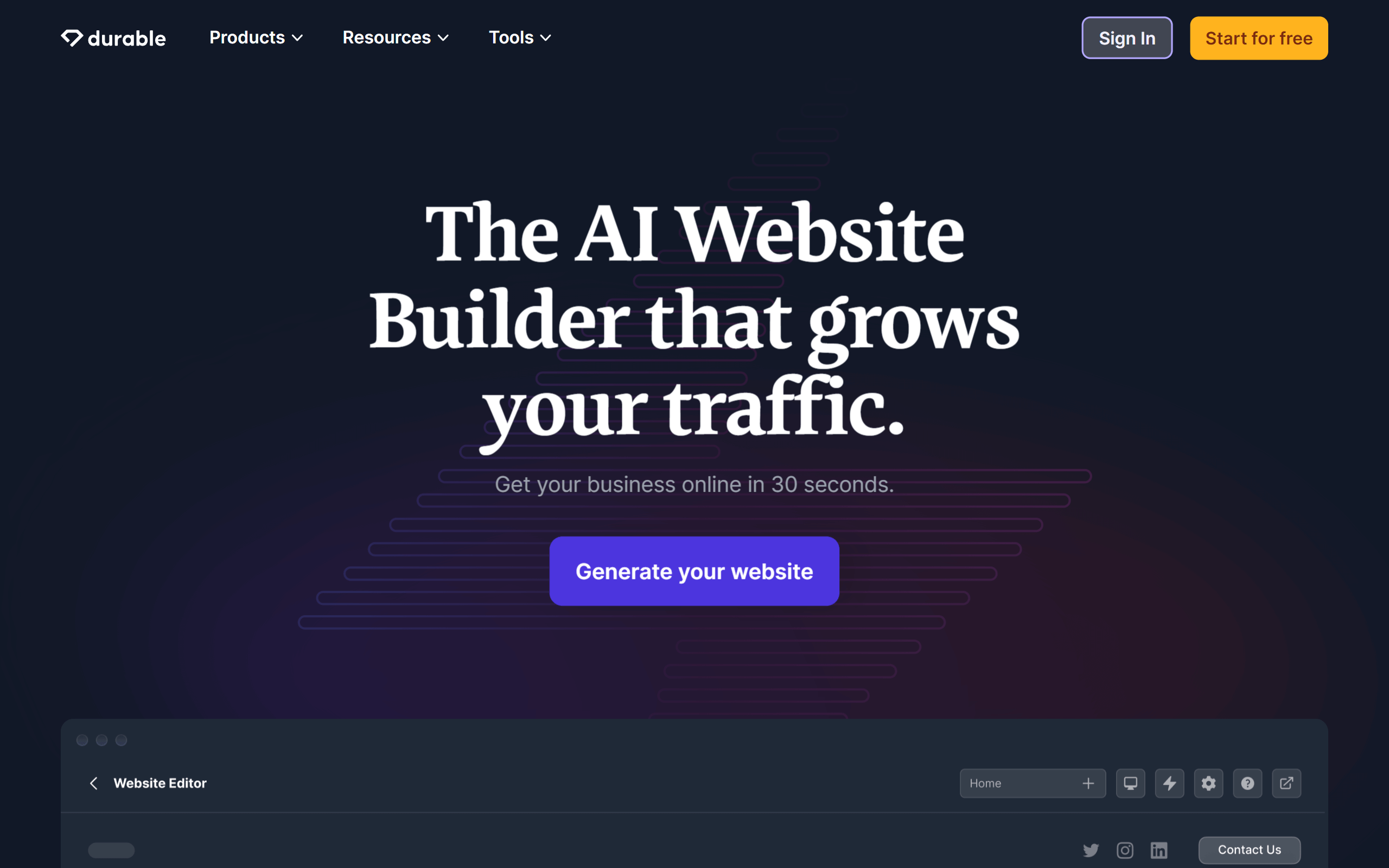
While more of a framework than a standalone utility, the "durable" software pattern, distinctly within lambda systems like Azure, exemplifies the AI Vibe. It permits developers to create complex, session-aware processes (like an e-commerce checkout process) in a simple, direct way. The core environment manages all the sophistication of session control, fault tolerance, and load handling, enabling programmers to zero in solely on the operational rules.
AI Web Design: The Generative Pictorial Integrator
For designers, the smart stratum acts as a strong integrator, qualified of originating fresh aesthetic inspirations and resources from straightforward summaries. These utilities can build all aspects from foundational identity components to intricate UIs, furnishing a abundant range of AI-generated creations that can be curated and enhanced by a flesh-and-blood aesthetic manager.
Autodraw
A simple but miraculous resource from Google, Autodraw is perfect for the preliminary phases of wireframing and conceptualization. You begin by doodling a approximate form, and its AI immediately endeavors to infer what you're drawing, giving you a selection of crisp, expertly rendered pictograms and drawings to swap your sketch. It's a wonderful method to rapidly build neat, graphically consistent lo-fi previews and diagrams.
Uizard
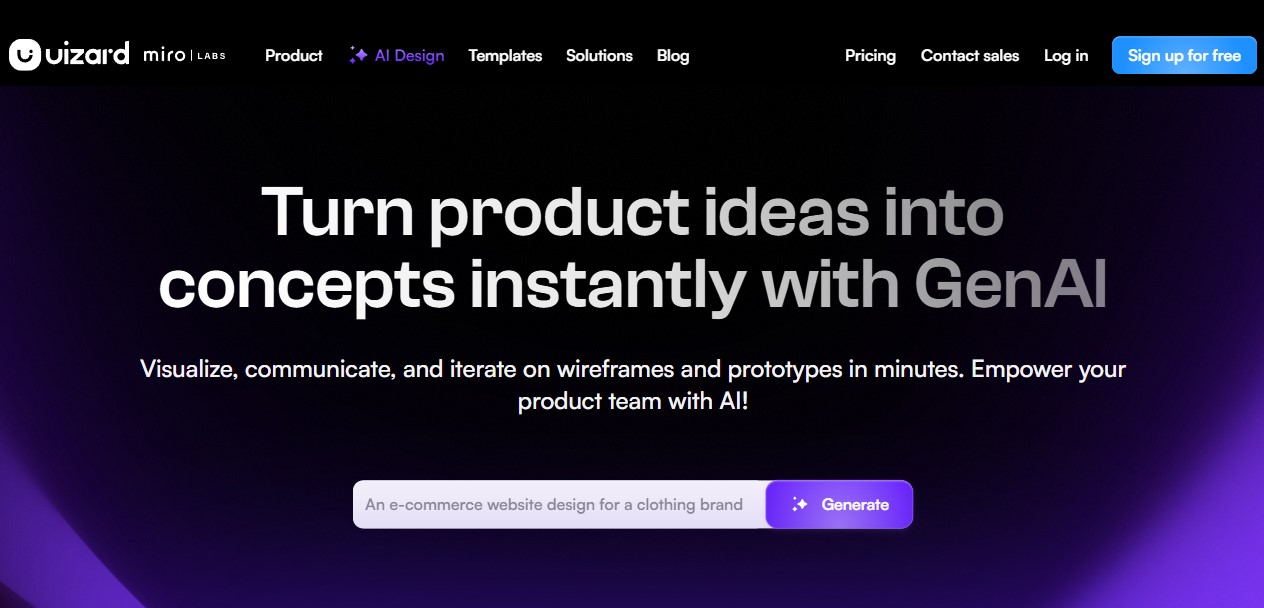
Uizard is a strong AI-driven visual editor that can transform hand-sketched drafts on pad into hi-fi digital models. You can only shoot a photo of a blueprint in your diary, and Uizard's AI will turn it into an editable layout with typical design system widgets. It also has a potent "Autodesigner" function that can build several-screen drafts from written prompts, leaving it a adaptable resource for swift wireframing.
Khroma
Khroma is a personalized AI color tool for designers. You originate by deciding on fifty of your beloved hues, and Khroma applies a machine learning engine to learn your leanings. It then generates an limitless multitude of special, five-color palettes that are adapted to your precise sensibility. It's a ingenious approach to uncover new and unpredicted hue mixes that you are numerically prone to adore, releasing you out of your usual artistic patterns.